


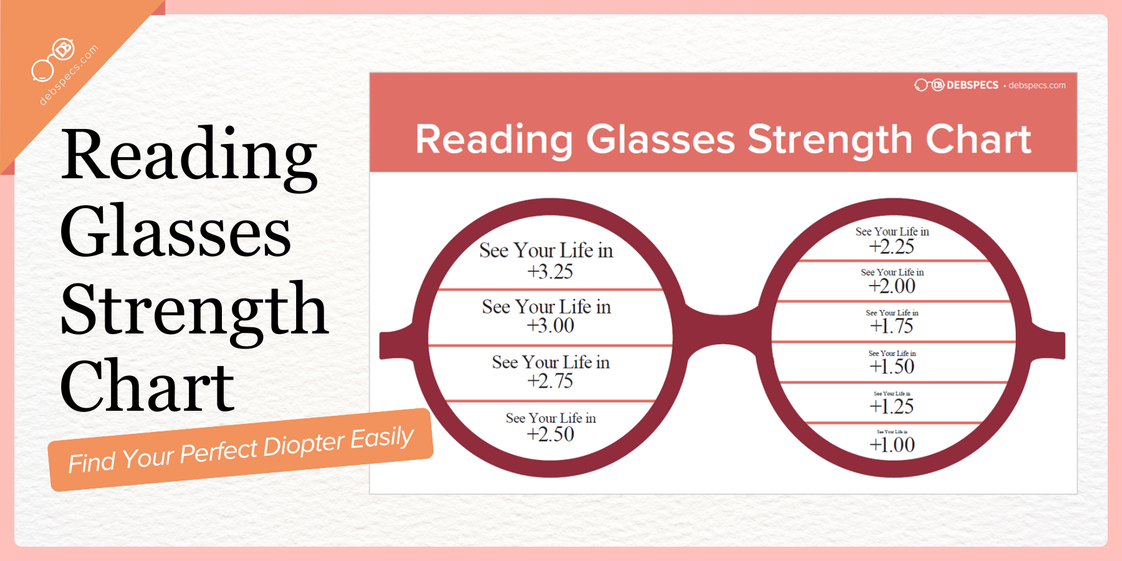
Reading Glasses Strength Chart: Find Your Perfect Diopter Easily
Posted by Team Debby on 26th Mar 2026
TL;DR: A reading glasses strength chart helps you choose the right magnification (diopter) based on your age and reading distance. Choosing the correct strength matters because the wrong power can cause eye strain, headaches, and blurry vision.
Reading Glasses Strength Chart: Find Your Perfect Diopter Easily
Diopter Chart Explained: What Do the Numbers Mean?
A reading glasses strength chart is a guide that helps you find the right magnification, measured in diopters, for reading and close-up work. Some shoppers may also call it a reading glass strength chart.
A diopter is the unit used to measure the magnifying power of a lens, and reading glasses typically range from +1.00 to +4.00 depending on how much help your eyes need.
The chart does not replace an eye exam—it simply gives you a comfortable starting point when choosing reading glasses. Many people also call this a reading glass chart, glasses reading chart, eyeglasses reading chart, eyeglass reading chart, or diopter chart when they are trying to compare lens powers in plain English. Find your chart here.
Turning the Right Strength Into Everyday Comfort
Once you understand how reading strength works, the next step is finding a pair that supports clear, comfortable vision in real life. Readers designed with the right magnification, fit, and lens options can make close-up tasks feel easier, more natural, and less tiring throughout the day.
Why Choosing the Right Reading Glasses Strength Matters
Many people guess their reading glasses strength, and sometimes that works—but often it leads to discomfort. If the strength is too weak, reading will still feel difficult. If it’s too strong, words may look clear at first but can cause headaches or eye fatigue.
The correct strength should make reading feel relaxed and natural. You shouldn’t need to squint, hold things far away, or feel pressure around your eyes after a few minutes.
A reading glasses strength chart by age, also called a reading glasses strength age chart, can be helpful because near vision often changes gradually after 40, but age is only a starting point. Your reading distance, screen habits, lighting, and comfort matter too.
How Diopters Work (Simple Explanation)
Diopters measure how much magnification a lens provides. The higher the number, the stronger the magnification.
- +1.00 – Light magnification
- +1.25 to +1.50 – Early reading support
- +1.75 to +2.00 – Moderate magnification
- +2.25 to +2.50 – Stronger reading support
- +2.75 to +3.00 – Strong magnification for small print
- +3.50 to +4.00 – Very strong magnification
As a general rule, the closer you need to hold reading material to see clearly, the stronger the diopter you may need.
If you are comparing an online diopter chart for reading glasses, a reading glasses diopter chart, a diopter chart for reading glasses, an eye prescription strength chart, or a prescription glasses strength chart to reading glasses powers, remember that prescription eyewear can include more than magnification alone. A reading glasses chart is mainly for near-vision magnification, while a prescription may also include sphere, cylinder, axis, or other measurements.
How a Reading Glasses Chart Helps You Choose
- Helps you choose a starting strength quickly
- Reduces trial and error when buying reading glasses
- Helps prevent eye strain from using the wrong power
- Makes ordering glasses online easier
- Helps you understand how your vision changes over time
The chart is meant to guide you toward comfort, not just clarity.
Some shoppers use a reading glasses test chart online, an online diopter chart, or a reading glasses test chart pdf before ordering, especially when they are choosing readers without visiting a store first.
A reading glass eye chart or eye chart for reading glasses can also help you test sample text at a comfortable reading distance before choosing a strength.
A Helpful Way to Use the Chart
Start with the strength suggested by your age range, then test how it feels at your normal reading distance. The right power should make text clear without forcing your eyes to work harder.
A reader magnification chart is most useful when you use it as a comfort guide, not as a rigid rule. If two strengths both seem clear, the slightly weaker option is often more comfortable for longer reading sessions.
Common Questions and Mistakes People Make
Can I just guess my reading glasses strength?
Many people do, but using a chart usually leads to a more comfortable result.
Is age the only factor?
No. Age is just a guide. Reading distance, lighting, and screen use also affect the strength you need.
Is stronger better?
No. Glasses that are too strong can cause eye fatigue and make it harder to focus.
When should I consider custom lenses?
If you get headaches, have different strength needs, or spend long hours on computers, customized lenses may feel more comfortable.
Who Should Use a Reading Glasses Strength Chart?
A reading glasses chart is especially helpful for:
- First-time reading glasses wearers
- Adults over 40 noticing near vision changes
- People ordering reading glasses online
- Anyone unsure whether they need +1.25, +1.50, or +2.00
- People whose eyes feel tired when reading
A Helpful Tip Before You Choose
If you are between two strengths, most people prefer the slightly weaker option for comfort, especially for longer reading sessions.
And remember—reading glasses are designed for close-up tasks like reading, phones, and hobbies, not for driving or full-time wear unless specifically designed for that purpose.
Frequently Asked Questions
What is the most common reading glasses strength?
Many people start around +1.25 to +1.50 in their early to mid-40s.
How do I know if my reading glasses are too strong?
You may feel eye strain, headaches, or need to hold reading material very close to your face.
How far should I hold a book when wearing reading glasses?
Typically about 14–16 inches from your eyes.
Will I need stronger reading glasses over time?
Most people gradually increase strength over the years as near vision changes.
The Right Strength Makes Reading Comfortable Again
Choosing the right reading glasses strength doesn’t have to be complicated. A simple chart, a basic understanding of diopters, and paying attention to comfort can help you find a pair that makes reading feel easy again.
Clear, comfortable vision is the goal—and the right strength makes all the difference.