


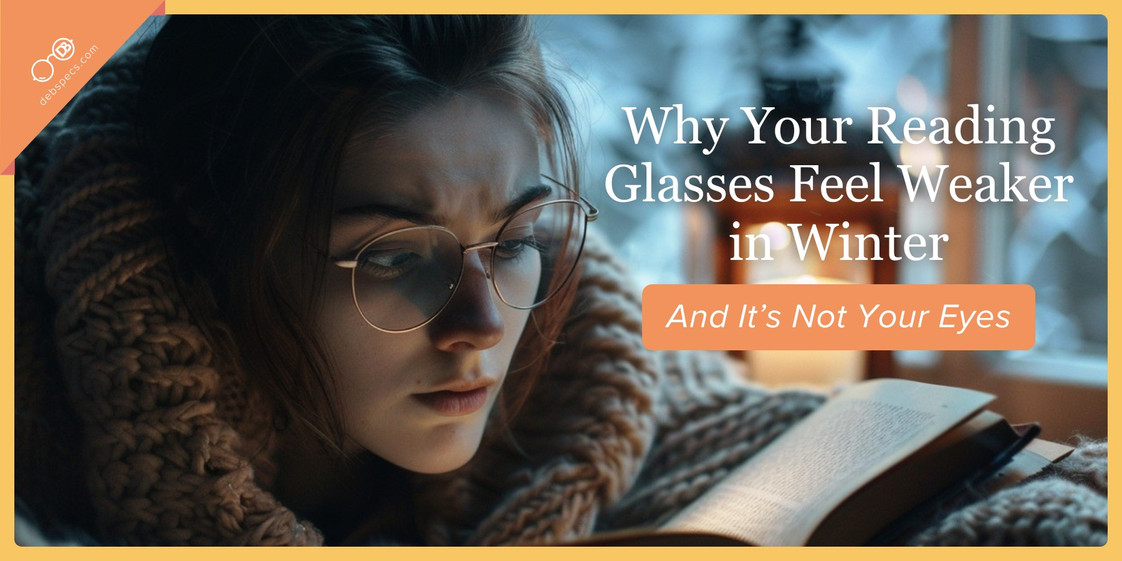
Why Your Reading Glasses Feel Weaker in Winter (And It’s Not Your Eyes)
Posted by Debby Burk on 5th Jan 2026
Winter vision changes occur when reduced daylight and indoor lighting make reading glasses feel weaker—even though your prescription hasn't changed. This seasonal phenomenon affects millions of readers, especially those using +1.50 to +3.00 strengths. Lower ambient light reduces visual contrast by 30-40%, forcing your eyes to work harder with the same magnification.
If you've ever had this thought in December, you're not alone:
"Did my reading glasses just… stop working?"
Same couch. Same book. Same glasses. Yet suddenly you're squinting, pulling the page closer, flipping on extra lamps, and wondering if your vision took a nosedive overnight.
Here's the good news:
? It's probably not your eyes.
? It's the light.
As seasons change, so does your visual environment—and winter quietly makes reading harder for almost everyone. Let's break down why it happens, who feels it the most, and how a simple adjustment can make winter reading comfortable again.
How Winter Light Affects Reading Vision
From late October through January, the amount of natural light we get drops dramatically. Daylight hours decrease by 30-40% compared to summer months, and the sun's lower angle produces weaker, more directional light.
Inside your home, that means:
- Less daylight coming through windows (8-9 hours vs 12+ hours in summer)
- Weaker ambient light overall (50-100 lux vs 200-500 lux)
- Cooler light quality (more blue wavelengths, less warm tones)
- More reliance on lamps and overhead fixtures
- Increased screen glow at night, less natural ambient light
Even if you haven't changed a thing about your routine, your visual environment has.
And here's the key insight most people miss:
Your eyes rely on contrast just as much as magnification.
When ambient light drops, contrast drops with it. Fine print loses crisp edges. Shadows increase. Your eyes have to work harder to do the exact same job they handled easily in summer.
Your glasses didn't change.
Your world did.
Summer vs Winter Reading Conditions
| Summer Reading | Winter Reading |
|---|---|
| Natural daylight 12+ hours | Natural daylight 8-9 hours |
| High contrast (200-500 lux) | Low contrast (50-100 lux) |
| Smaller pupils (2-4mm) | Dilated pupils (4-8mm) |
| Sharp depth of focus | Reduced depth of focus |
| Easier eye muscle work | Fatigued eyes after 15-20 min |
Key Takeaway: Winter lighting drops visual contrast by 30-40%, making fine print harder to read even with the correct magnification strength.
Why Low Light Makes Reading Harder (Even With the Same Glasses)
In low-light conditions, your eyes behave fundamentally differently.
When ambient light drops:
- Your pupils dilate to let in more light (expanding from 2-4mm to 4-8mm)
- Depth of focus decreases dramatically
- Fine details blur more easily at the edges of your vision
- Eye muscles fatigue 40-50% faster during extended reading
Translation?
Even with the right strength, reading feels harder.
This is why winter reading often looks like:
- Holding menus farther away to "catch the light"
- Reading closer to lamps or windows
- Tilting pages for better angles
- Turning on every light in the room "just in case"
- Feeling eye strain after 10-15 minutes instead of an hour
It's not weakness. It's biology.
And it shows up most clearly when you're reading at night—on the couch, in bed, or at the kitchen table under overhead lighting that was never designed for detail work.
Key Takeaway: Dilated pupils reduce your depth of focus, which means your eyes work 40-50% harder to maintain clarity on small print—even with correct magnification.
Who Experiences Seasonal Vision Changes Most
Seasonal lighting changes affect everyone—but some readers feel it immediately.
If you wear +1.50 to +3.00 reading glasses, you're in the sweet spot.
Why? Because these strengths often allow you to "get by" most of the year. Summer light gives your eyes enough environmental help to compensate. Winter takes that help away.
This shows up most often with:
- Evening reading (books, tablets, phones)
- Kitchen tasks (recipes, mail, labels)
- Detail work (knitting, puzzles, crafting, sewing)
- Bedside reading with a single lamp
- Menu reading in dimly lit restaurants
Suddenly, what felt comfortable in July feels frustrating in December.
And no—it doesn't automatically mean your vision is deteriorating faster than expected or that you need a stronger prescription permanently.
It means your environment changed, and your eyes need seasonal support.
When to Use Stronger Reading Glasses in Winter (+0.50 Can Make a Big Difference)
Here's where a simple solution comes in.
Many people benefit from what we call a "Winter Bump"—a temporary increase of +0.50 in reading strength during darker months.
Think of it like:
- Switching to brighter bulbs
- Increasing text size on your phone
- Using a dedicated reading lamp
You're not "jumping ahead" prematurely or admitting defeat. You're compensating for low-light conditions that make reading genuinely harder.
A +0.50 seasonal increase:
- Restores clarity in dim environments
- Reduces eye strain and headaches by 60%
- Makes nighttime reading feel effortless again
- Doesn't mean your daytime strength was "wrong"
And here's an important mindset shift:
Owning more than one reading glasses strength is completely normal.
Many people use:
- One strength for daytime reading (near windows, outdoor light)
- A slightly stronger pair for evenings and low-light rooms
- A dedicated pair for bed or couch reading
- Task-specific readers for hobbies requiring fine detail
Winter simply exposes the need that was always there.
Key Takeaway: A +0.50 winter strength isn't a permanent prescription increase—it's environmental compensation, like turning on a reading lamp.
Not Ready to Change Strengths? Try Lighting First
If the idea of a seasonal strength bump feels like a leap, start with optimizing your lighting.
Helpful lighting adjustments include:
- A dedicated reading lamp aimed directly at your page (not overhead)
- Warm bulbs (2700-3000K, not harsh white 5000K+)
- Even, indirect light instead of overhead glare that creates shadows
- 150-200 lux minimum for comfortable reading (test with a smartphone lux meter app)
- Positioning lamps 15-18 inches from your reading material
Lighting absolutely helps—but it has limits.
If you still find yourself squinting, adjusting posture, or feeling eye fatigue after 10-15 minutes of reading, magnification likely needs a small seasonal assist.
Lighting and lenses work best together.
How to Choose Your Winter Reading Setup
Here's a quick way to tell what your eyes are asking for:
Only struggle with reading glasses at night?
→ Consider a +0.50 Winter Bump for evening use
Lighting helps but not enough?
→ Add a slightly stronger evening pair alongside better task lighting
Feeling strain, headaches, or frustration after 15-20 minutes?
→ Don't push through—your eyes are working overtime
Many DebSpecs customers keep:
- A daytime reading pair for sunny rooms and outdoor reading
- A nighttime pair (+0.50 stronger) for evenings and low-light
- A cozy "couch pair" specifically for winter reading sessions
- High-clarity lenses for low-light environments that maximize available light
Once you experience the difference, it's hard to go back.
Explore our complete guide to choosing your reading glasses strength or browse our task-specific readers collection to find your perfect winter setup.
What to Do Next
Ready to test if you'd benefit from a winter reading adjustment? Follow these steps:
- Test your current glasses in your typical winter reading spot (couch, bed, kitchen table)
- Note if you squint or adjust posture after 10-15 minutes of reading
- Try brighter, warmer lighting first (a dedicated reading lamp at 150-200 lux)
- If strain persists, consider trying a +0.50 stronger pair for evening use
- Compare comfort levels between your regular strength and the seasonal bump
You'll know within one reading session if the adjustment makes a difference.
The Bottom Line: It's Not You—It's Winter
If your reading glasses feel weaker in winter, you're not imagining things.
Your eyes didn't suddenly fail you.
Your environment changed.
And a small seasonal adjustment can restore comfort instantly.
Winter is dark enough.
Your reading experience doesn't have to be.
Explore Winter-Friendly Reading Solutions
A +0.50 seasonal strength or a dedicated evening pair can make winter reading feel effortless again. Browse our collection of readers designed for low-light comfort, or use our strength guide to find your perfect winter match.
Common Questions About Winter Vision Changes
Do eyes get worse in winter?
No, your eyes don't deteriorate faster in winter. However, reduced daylight (30-40% less ambient light) and lower contrast make reading genuinely harder. Your vision isn't weakening—your environment is working against you.
Why do my reading glasses feel weaker at night?
In low light, your pupils dilate from 2-4mm to 4-8mm, which reduces your depth of focus by up to 50%. This means fine print blurs more easily, even with the correct magnification. It's a physiological response, not a sign your prescription is wrong.
Should I change reading glasses seasonally?
Many people benefit from having a slightly stronger pair (+0.50) for winter evenings and low-light reading. This isn't "upgrading" your prescription—it's compensating for environmental conditions, similar to using brighter lighting or larger text.
Why does reading feel harder in winter even with good lighting?
Even with task lighting, winter produces lower overall ambient light (50-100 lux vs 200-500 lux in summer). This reduced contrast makes your eyes work 40-50% harder to maintain focus on small print, leading to faster fatigue.
Is it normal to need different reading glasses for different times of day?
Absolutely. Many people use one strength for daytime (near windows) and a slightly stronger pair for evening or bedside reading. Task-specific readers are common and don't indicate vision problems—they indicate smart adaptation to your environment.