


How Much Does an Eye Exam Cost?
Posted by Team Debby on 1st May 2026
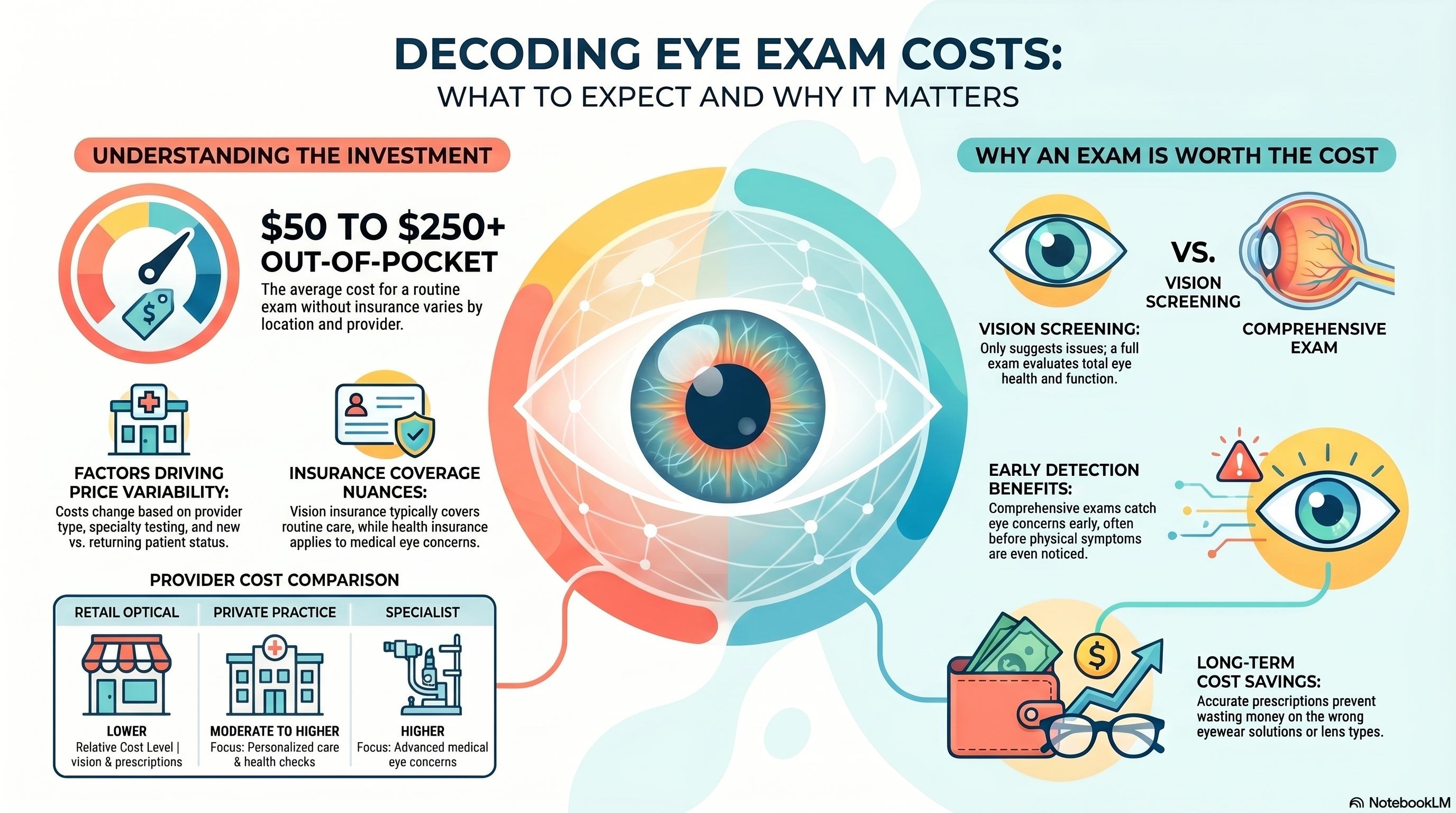
TL;DR: An eye exam checks both your vision and your overall eye health, and the price usually depends on where you go, what kind of exam you need, and whether insurance helps cover it. For many adults, a routine exam without insurance may fall somewhere around $50 to $250+, with extra testing or specialty services increasing the total.
An eye exam is a professional check of how well you see and how healthy your eyes are, and the cost can vary based on the provider, the type of visit, and what testing is included.
Why does eye exam cost matter?
Cost matters because it often affects when people book care. Many adults delay an exam simply because they are unsure what they will pay, especially if they do not have vision insurance.
But an eye exam is about more than updating your glasses. It can also help catch eye concerns earlier, sometimes before you notice symptoms. That makes the cost easier to think about in context. You are not only paying for clearer day-to-day vision. You are also paying for information, reassurance, and a closer look at your long-term eye health.
When Clearer Vision Becomes Part of the Plan
Understanding eye health is often the first step toward seeing daily life more comfortably and confidently. Thoughtfully designed eyewear can help turn that insight into practical support—bringing clearer focus, better comfort, and a fit that feels made for real life.
How does an eye exam work?
A routine eye exam usually begins with questions about your vision, comfort, health history, and any recent changes you have noticed. From there, the provider may check how clearly you see, whether your prescription has changed, and how your eyes work together.
Depending on your age, symptoms, or risk factors, the visit may also include pressure testing, dilation, or retinal imaging so the doctor can look more closely at the inside of the eye.
In simple terms, the exam fee reflects the provider’s time, training, equipment, and the testing needed to understand both your vision and your eye health.
What affects the cost of an eye exam?
Several things can change the final price:
- Type of provider: Retail optical locations often cost less than private practices or specialists.
- Location: Exams in higher-cost areas are often priced higher.
- Type of exam: A basic vision check usually costs less than a full comprehensive exam.
- Extra testing: Dilation, retinal imaging, glaucoma checks, and contact lens fittings may be billed separately.
- Insurance: Vision insurance may lower your out-of-pocket cost, while health insurance is more likely to apply when the visit is medically necessary.
- New vs. returning patient status: Some practices offer different pricing for return visits or self-pay patients.
What are the benefits of getting a regular eye exam?
- Clearer day-to-day vision: A current prescription can make reading, driving, screens, and detail work feel easier.
- Earlier detection: Eye exams can catch problems before they become more noticeable or disruptive.
- Better comfort: Updated lenses can reduce squinting, eye strain, and visual fatigue.
- Smarter eyewear decisions: Your exam helps you choose the right glasses, lens type, and features for how you actually live.
- More confidence: When you know your vision needs, you are less likely to waste money on the wrong solution.
Is it worth it? How does it compare to other options?
Is it worth it? For most adults, yes. If your vision has changed, your eyes feel strained, or it has been a while since your last check, an exam gives you useful answers instead of guesswork.
Is an eye exam the same as a vision screening? No. A quick screening may only suggest that something seems off. A full eye exam is much more thorough and is designed to evaluate both vision and eye health.
Are there downsides? The main drawback is cost, especially if you need additional testing or do not have insurance. Dilation can also leave your vision temporarily blurry and light-sensitive for a few hours.
Who may not need the most expensive exam? If you only need a routine prescription update and have no symptoms or known eye health concerns, a straightforward routine exam may be enough. If you have diabetes, eye disease, sudden vision changes, or other medical concerns, a more comprehensive visit may be the better fit.
Who is this best for?
This topic is especially helpful for:
- Adults noticing more blur, squinting, or eye fatigue
- Anyone buying new glasses and wanting the right prescription first
- People over 40 keeping up with changing near vision
- Contact lens wearers who may need separate fitting services
- Anyone who wants to understand the difference between routine vision care and medical eye care before booking
What should you know before booking?
If you are comparing providers, it helps to ask one simple question: What is included in the quoted exam fee?
That can help you understand whether the price includes refraction, dilation, retinal imaging, or only the basic visit. It also helps to ask whether contact lens fittings, follow-up visits, or medical testing are separate.
Once you have an up-to-date prescription, choosing eyewear becomes much simpler. Whether you need everyday readers, bifocals, or something more customized, the exam gives you the information needed to choose with more confidence.
FAQs About Eye Exam Cost
How much does an eye exam cost without insurance?
A routine exam may range roughly from about $50 to $250+, depending on the provider, location, and whether extra testing is included.
Does vision insurance usually cover eye exams?
Often, yes for routine vision care, usually with a copay. Health insurance is more likely to apply when the visit is medically necessary rather than routine.
Why are some eye exams much more expensive than others?
The price can go up based on the type of provider, cost of living in the area, extra testing, contact lens services, and whether you are seeing a specialist.
Is a vision screening enough instead of a full eye exam?
Not usually. A screening is limited. A full eye exam gives a more complete look at both how you see and how healthy your eyes are.
Can I ask for pricing before I go?
Absolutely. It is smart to ask what is included, whether dilation or imaging costs extra, and what your insurance or copay will likely cover.
The bottom line on eye exam cost
Eye exam pricing can feel inconsistent at first, but there is usually a reason behind it. The final number often reflects the kind of care you need, the tests included, and the provider you choose.
The good news is that once you understand the basics, the process feels far less confusing. An eye exam is not just another expense to figure out. It is one of the clearest ways to stay on top of your vision, your comfort, and your long-term eye health.