


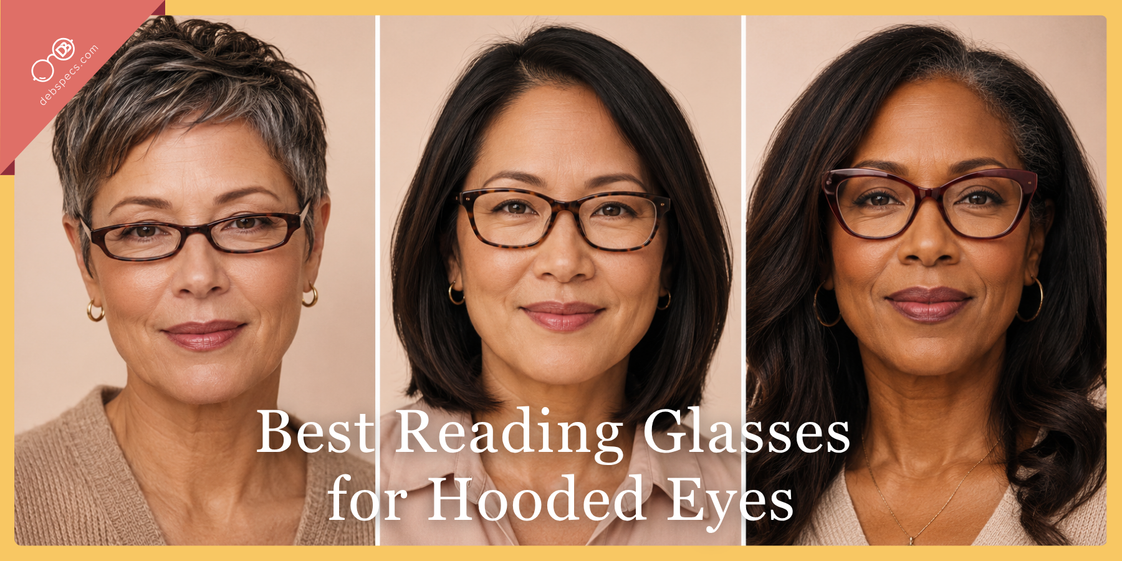
Best Reading Glasses for Hooded Eyes
Posted by Team Debby on 31st Jul 2026
TL;DR: The best reading glasses for hooded eyes usually have enough lens height to keep the eye area feeling open, along with softly upswept or gently rounded corners. A secure bridge and properly sized frame matter just as much as shape because glasses that slide can make even a flattering design sit too low.
What are hooded eyes?
Hooded eyes have a fold of skin from the brow area that overlaps part of the upper eyelid crease when the eyes are open.
Some people naturally have hooded eyelids from childhood, while others notice more hooding as the skin and brow area change with age. Hooded eyes may be almond, round, deep-set, close-set, or wide-set, so hooding is only one part of your overall eye shape.
Cleveland Clinic describes hooded eyes as having eyelid or forehead skin that overhangs the eye area. This is a facial feature, not something that automatically needs to be corrected.
Why does frame shape matter for hooded eyes?
Hooded eyes often have less visible eyelid space when the eyes are open. A frame with a very low lens height or a heavy, straight top line may cross the eye area in a way that makes it feel more compressed.
A slightly taller or softly lifted frame can create more visual room around the eyes. Upswept outer corners also guide attention toward the temples, which can give the upper face a brighter, more open appearance.
This does not mean every person with hooded eyes must wear cat-eye glasses. Frame width, bridge placement, brow shape, cheek height, and personal style can change how the same design looks on two different faces.
Debby Burk Optical's guide to hooded eyes, makeup, and flattering eyewear recommends cat-eye shapes, lightly arched silhouettes, and frames with an upward visual direction.
Which frame shapes work best with hooded eyelids?
Soft cat-eye frames
A soft cat-eye has outer corners that rise gently without becoming sharply theatrical. The lifted shape can echo the brow line and draw attention outward, while still feeling comfortable for everyday reading.
Butterfly and softly upswept frames
Butterfly frames provide more vertical room through the lens and usually widen toward the temples. They can open the eye area without relying on a dramatic point at the outer corner.
Rounded frames with moderate height
Rounded rectangles, ovals, and softly curved frames can keep the eye area looking approachable and open. Choose a shape with enough height rather than a very shallow oval that cuts closely across the eyelid.
Lightweight translucent or metal frames
Clear acetate, softly colored translucent frames, and fine metal rims can define the eyes without creating a dark line across the brow area. They are especially helpful when you prefer a subtle look.
Feel Good Contacts similarly recommends cat-eye and butterfly shapes for hooded eyes, while emphasizing that the frame should stay comfortable and secure on the bridge. Pair Eyewear also suggests styles that leave the eye area feeling unobstructed.
What do different frame heights look like on hooded eyes?
The three-photo comparison shows why lens height can change the overall effect, even when the model's eyes and reading strength remain the same.
Photo 1: Low frame height
A shallow frame may sit close to the eyelid crease and visually divide the eye area. This can still work for a petite face, but the bridge must hold the frame high enough that the top rim does not sit directly across the most hooded part of the lid.
Photo 2: Medium frame height
A medium-height lens often creates the easiest balance. It gives the eyes room without overwhelming the brows or touching the cheeks, making it a dependable starting point for everyday readers.
Photo 3: Taller or upswept frame
A taller lens creates more space around the eye, while an upswept outer edge adds lift. The frame should still clear the eyebrows and cheeks so it does not move when you smile.
Eyewear guides commonly advise against very short lens heights for hooded eyelids because they can make the visible eye area feel smaller. However, the position of the frame matters as much as the measurement itself.
What are the benefits of choosing the right frames for hooded eyes?
- A more open eye area: Moderate lens height gives the eyes more visual space within the frame.
- Gentle visual lift: Upswept corners can guide attention toward the temples and brow.
- Less competition with the eyelid: Lighter rims and balanced proportions avoid creating an overly heavy line.
- More confidence in photographs: A well-positioned frame defines the eye area without hiding it.
- Better everyday comfort: Correct width and bridge fit help prevent sliding, pinching, and constant adjustment.
Should you avoid small, dark, or straight-across frames?
Not automatically. A dark rectangular frame can look striking on hooded eyes when the width, bridge, and brow placement are right. The concern is usually visual weight, not the color or shape by itself.
Very small frames may feel less flattering when their top rim sits directly across the eyelid fold. They can also provide less lens area, which may be inconvenient for bifocal or progressive designs.
Oversized frames have the opposite concern. They can open the eye area beautifully, but a frame that is too tall may touch the brows or cheeks. A frame that is too wide may also slide, which changes where the top rim sits.
The better question is not, "Is this frame allowed for hooded eyes?" Ask whether it keeps your eyes visible, follows your brow comfortably, stays in place, and feels proportionate to the rest of your face.
Is face shape or eye shape more important?
Both are useful, but they answer different questions. Eye shape helps you evaluate what happens around the brow and eyelids. Face shape helps you balance the forehead, cheekbones, jawline, and overall width of the frame.
Someone with hooded eyes and a round face may enjoy a softly angular cat-eye. Someone with hooded eyes and a square face may prefer curved corners. A heart-shaped face may need a lighter top line even when an upswept silhouette is flattering.
Use Debby Burk Optical's guide to choosing glasses for your face shape as a second filter after identifying the frame height and brow placement you like.
Who are these frame styles best for?
- Women whose upper eyelid crease is partly hidden when their eyes are open
- Readers who feel that shallow rectangular glasses make their eyes appear smaller
- Anyone who likes a gentle lifting effect around the temples
- Adults looking for a frame that feels polished in person and in photographs
- People who want stylish readers without a heavy or overly clinical appearance
Hooded-eye styling advice may be less relevant if the frame is being selected mainly for a specialized prescription, unusually high magnification, or a very particular lens design. In those cases, lens requirements and professional fitting should come first.
Sudden eyelid changes, one-sided drooping, pain, or eyelid skin that interferes with vision should be discussed with an eye care professional rather than treated as a styling concern.
How can you compare flattering readers more confidently?
Begin with a pair you already own. Note its frame width, bridge width, lens height, and how the top rim sits in relation to your eyelid crease and brows. Debby Burk Optical's glasses measurement guide explains how to read and compare these dimensions.
For a narrow face, the Intuitive cat-eye reader offers a 40 mm lens height and a softly upswept shape. The Miranda cat-eye reader provides a slightly taller 43.5 mm frame height while maintaining a petite fit.
For an average face width, the Dearly cat-eye reader has a 44 mm lens height, softly lifted corners, and spring hinges. These measurements are starting points, not guarantees, because bridge position and facial proportions still determine where the frame sits.
What do people ask about reading glasses for hooded eyes?
Are cat-eye glasses always best for hooded eyes?
Cat-eye frames are a dependable option because their outer corners create lift, but they are not the only choice. Butterfly, rounded rectangle, oval, and softly arched frames can also keep the eye area open.
Do oversized glasses look good with hooded eyelids?
They can, especially when the lenses provide generous vertical room. Make sure the frame does not touch your cheeks, cover your eyebrows, or slide because it is too wide.
What frame colors flatter hooded eyes?
Translucent blush, tortoise, soft blue, burgundy, warm metal, and clear frames can define the eyes without creating a harsh top line. Black can also work beautifully when the frame is well proportioned.
Should glasses sit above or below the eyelid crease?
There is no required position, but the top rim usually looks more balanced when it follows the brow line rather than cutting directly through the most visible part of the eyelid fold.
Can the wrong bridge make hooded eyes look smaller?
Yes. If the bridge is too wide and the glasses slide down, the top rim may move across the center of the eye area. A secure bridge keeps the intended frame shape in the right position.
Choose openness, balance, and a frame that feels like you
Hooded eyes do not need to be hidden or corrected. They simply benefit from frames that respect the natural shape of the eyelid and leave enough visual room around the eyes.
Begin with moderate lens height, a secure bridge, and a silhouette with gentle lift or softness. Then let your face shape, coloring, and personal style guide the final choice. The most flattering readers are the ones that keep your eyes visible, feel comfortable, and make you look forward to putting them on.