


Why Your Lenses Fog And How To Stop It
Posted by Team Debby on 26th May 2026
How to Stop Reading Glasses from Fogging Up (For Good)
TL;DR
Reading glasses fog when warm, moist air hits cooler lenses and turns into tiny water droplets. The best way to stop fogging is to control airflow, keep lenses clean, improve fit around your face, and use anti-fog products or coatings when everyday fixes are not enough.
Choosing Readers That Feel Easier in Real Life
Once you understand why lenses fog, it becomes easier to see how fit, airflow, and everyday comfort all work together. These reader options are designed to support clearer, more comfortable wear during the real moments when temperature changes, masks, movement, or close-up tasks can make lenses feel harder to use.
Why do reading glasses fog up?
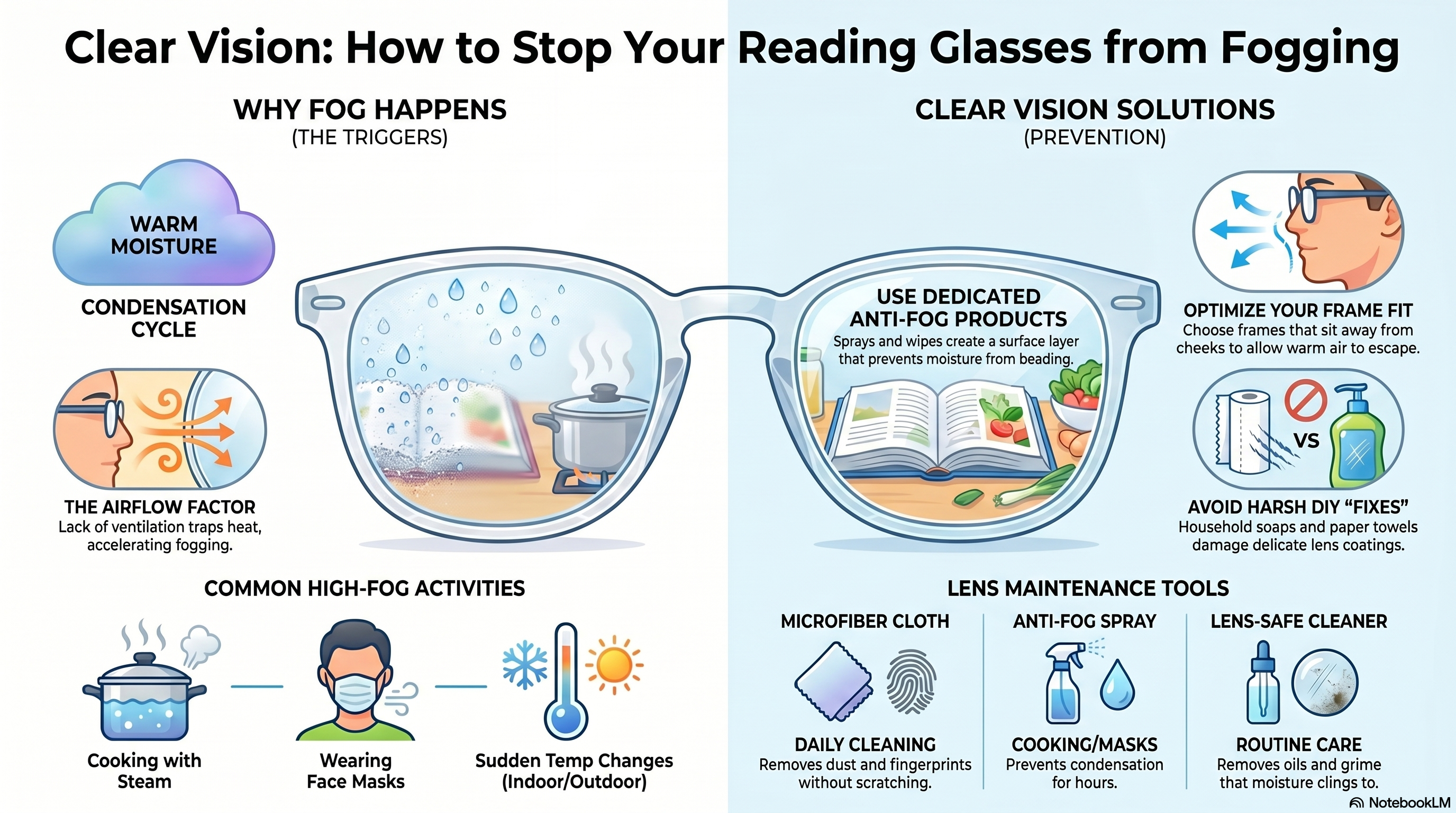
Reading glasses fog up when warm, humid air from your breath, cooking steam, weather, or body heat meets a cooler lens surface and forms condensation.
That fog is not dirt on the lens. It is moisture collecting in tiny droplets. The droplets scatter light, which makes the lens look cloudy and makes reading feel instantly frustrating.
This is why fogging often happens when you move from a cold place into a warm room, wear a face mask, cook over steam, drink a hot beverage, open the dishwasher, or step outside on a humid day. The Hospital da Luz explains that fogging occurs when warm exhaled air escapes upward and condenses on cooler lenses, which is the same basic principle behind fogging during cooking or temperature changes.
Why does lens fog matter in real life?
Foggy readers are more than a small inconvenience. They interrupt the exact moments when you need your glasses most.
You may notice it while reading a recipe over a simmering pot, checking your phone after coming inside, reading labels at the grocery store, or trying to see clearly while wearing a mask in a medical office.
The problem can feel especially annoying because it happens suddenly. One second your readers are clear. The next, you are wiping them on your shirt, leaning away from steam, or taking them off entirely.
How do you stop reading glasses from fogging?
The simplest way to stop reading glasses from fogging is to reduce the warm, moist air reaching your lenses and make the lens surface less likely to collect visible droplets.
That usually means a few practical habits working together: better airflow, cleaner lenses, a better mask or frame position, and an anti-fog solution when needed.
- Redirect warm air away from the lenses. This is especially helpful with masks, scarves, and cooking steam.
- Clean lenses properly. Oils and residue can make fog cling more easily.
- Improve frame fit. A small adjustment can create better airflow around the lens.
- Use anti-fog wipes, sprays, or coatings. These can help reduce visible condensation.
What is the fastest fix for foggy reading glasses?
The fastest fix is to clean your lenses with a proper lens cloth and move the glasses slightly away from the warm air source.
If you are wearing a mask, make sure the top edge sits snugly across the bridge of your nose. Then rest your glasses slightly over the top edge of the mask so less breath escapes upward. The American Academy of Ophthalmology recommends pulling the mask higher on the nose and resting glasses on top to help block escaping air.
If you are cooking, step slightly back from steam, turn on the range hood, or tilt your face away when opening a hot pot, oven, or dishwasher. Small changes in airflow can make a surprising difference.
Do anti-fog sprays and wipes really work?
Anti-fog sprays and wipes can help, especially if your glasses fog often and basic adjustments are not enough.
Most anti-fog products work by changing how moisture behaves on the lens surface. Instead of forming larger visible droplets, the moisture spreads into a thinner, more even layer that is harder to see through the lens.
This does not mean anti-fog products are magic. They need to be applied correctly, and some products may not be suitable for every lens coating. Always check whether a spray or wipe is safe for your lenses before using it, especially if your readers have special coatings.
Can lens coatings help prevent fogging?
Yes, some lenses can be made with anti-fog treatments or coatings. These are designed to reduce fogging more consistently than a quick wipe or home remedy.
Anti-fog coatings are different from anti-glare or anti-reflective coatings. Anti-glare helps reduce reflections. Anti-fog helps manage condensation. Blue light, polarized, anti-glare, and anti-fog features all solve different problems, which is why it helps to understand what each lens option is meant to do.
For a broader breakdown of lens features, you can read DebSpecs’ guide to Lens Tech: Blue Light vs Anti-Glare vs Polarized. It explains how different lens upgrades support different kinds of visual comfort.
What helps when glasses fog up while cooking?
Cooking is one of the most common fogging triggers because steam rises directly toward your face and lenses.
To reduce fog while cooking:
- Use the range hood or exhaust fan when boiling, simmering, or steaming.
- Step back before opening pot lids, ovens, or dishwashers.
- Tilt lids away from your face so steam moves forward, not upward.
- Clean lenses before cooking so oil and residue do not trap moisture.
- Consider anti-fog wipes if cooking fog happens often.
If you use readers mainly for recipes, ingredient labels, or food prep, keeping a clean pair in the kitchen can help. Grease, fingerprints, and cooking residue make fog feel worse because the lens is already less clear before condensation begins.
What are the benefits of anti-fog reading glasses?
Anti-fog reading glasses or anti-fog lens treatments can be helpful if fogging is part of your daily routine, not just an occasional annoyance.
- Clearer reading during temperature changes: Less clouding when moving between indoor and outdoor spaces.
- Less wiping: Fewer interruptions while cooking, working, or running errands.
- Better comfort with masks or scarves: Helpful when warm breath is directed upward.
- More confidence in humid settings: Useful in kitchens, bathrooms, salons, medical spaces, and warm climates.
- Cleaner visual experience: Less stop-and-start frustration when you are trying to focus on small print.
Are there downsides to anti-fog products?
Anti-fog products are useful, but they are not perfect.
Sprays and wipes may need to be reapplied. Some formulas may leave a light film if they are overused or not buffed correctly. Certain products may not be recommended for lenses with specific coatings, so it is always best to follow the product instructions.
Home remedies should also be used carefully. Harsh soaps, shaving cream, toothpaste, alcohol, or rough paper towels can damage lenses or coatings. A clean microfiber cloth and lens-safe cleaner are much better everyday choices.
Who needs anti-fog reading glasses most?
Anti-fog support may be especially helpful if your readers fog often enough to interrupt your day.
You may benefit if you:
- Cook often and read recipes, labels, or instructions in the kitchen
- Move between cold outdoor air and warm indoor rooms
- Wear masks, scarves, or face coverings
- Live in a humid climate
- Work around steam, heat, or frequent temperature changes
- Find yourself wiping your lenses several times a day
Who may not need anti-fog readers?
You may not need a special anti-fog solution if your glasses only fog once in a while.
If fogging happens only when you open the oven or walk inside from cold weather, simple habits may be enough. Better cleaning, improved airflow, and allowing lenses to adjust to room temperature can solve occasional fogging without extra lens features.
But if fogging is part of your daily routine, it may be worth considering lens-safe anti-fog wipes, sprays, or anti-fog lens options.
Can DebSpecs help with foggy reading glasses?
Yes. If your readers fog often, it helps to understand which lens features solve which problems. Anti-fog support is different from anti-glare, blue light filtering, or polarized lenses, and choosing the right feature depends on when your glasses fog most.
For example, if your glasses fog while cooking, moving between temperatures, or wearing a mask, anti-fog support may be helpful. If your main issue is reflections from screens or overhead lights, anti-glare may be the better feature to consider. If outdoor glare is the problem, polarized lenses serve a different purpose.
You can learn more in DebSpecs’ guide to Lens Tech: Blue Light vs Anti-Glare vs Polarized, which explains how different lens options support different kinds of everyday visual comfort.
FAQs about foggy reading glasses
Why do my glasses fog up when I cook?
Cooking creates warm steam that rises toward your face. When that moist air touches cooler lenses, it condenses into fog. Better ventilation and stepping back from steam can help.
Do anti-fog wipes work on reading glasses?
They can. Anti-fog wipes are designed to reduce visible condensation on lenses, but they should be safe for your lens type and applied according to the instructions.
Can I use dish soap to stop my glasses from fogging?
Some people use mild soap as a temporary anti-fog trick, but it is safer to use products made for eyewear. Harsh cleaners, abrasive cloths, or strong household products can damage lens coatings.
Why do my glasses fog when I wear a mask?
Your warm breath can escape from the top of the mask and travel upward onto your lenses. A snug nose fit and resting the glasses over the mask edge can help redirect that air.
Are anti-fog and anti-glare the same thing?
No. Anti-fog helps reduce condensation. Anti-glare helps reduce reflections. They are different lens features for different visual comfort problems.
Clear lenses make everyday reading feel easier
Foggy reading glasses are frustrating because they interrupt your focus right when you need clarity. The good news is that most fogging has a simple cause: warm, moist air meeting cooler lenses.
Once you understand that, the solution becomes calmer and more practical. Improve airflow, keep lenses clean, use lens-safe anti-fog support when needed, and choose lens features that match your daily routine.